%202.svg)
Churches get automatic tax exemption, but IRS rules still apply. This guide covers 501(c)(3) status, Form 990, UBIT, audit protections, and donor requirements.
This article is for general informational purposes only and does not constitute legal, tax, or accounting advice. Church leaders should consult a qualified tax professional or attorney for guidance specific to their organization's situation.
Church finance comes with a lot of moving parts. Budgets, payroll, designated funds, donor acknowledgments. And sitting underneath all of it is a set of IRS rules for churches that most administrators understand in broad strokes but rarely feel confident about in the details.
The good news is that churches occupy a genuinely favorable position under federal tax law. The framework Congress built for religious organizations is more generous than many people realize, including automatic tax exemption, special audit protections, and exemption from Form 990 filing requirements that apply to most other nonprofits.
The bad news is that "favorable" doesn't mean "simple." There are real compliance obligations that get missed, sometimes with consequences that are difficult to undo.
The churches we work with most often run into compliance gaps not from dramatic violations but from process holes that accumulate quietly over time. Understanding the framework is the first step to closing them.
Most people know that churches don't pay federal income tax. Fewer understand exactly how that exemption is structured in the law.
Churches that meet the requirements of Section 501(c)(3) of the Internal Revenue Code are automatically considered tax exempt under federal law and are not required to apply for and obtain recognition of exempt status from the IRS. That word "automatically" is important. A church doesn't need to file paperwork to be tax-exempt under federal law. The exemption exists by operation of the tax code itself, under Section 508(c).
Donors are allowed to claim a charitable deduction for donations to a church that meets the Section 501(c)(3) requirements even though the church has neither sought nor received IRS recognition that it is tax exempt.
So a church can receive tax-deductible donations, be free from federal income tax, and never send a single form to the IRS establishing any of that. For many smaller congregations, that's exactly how things work. There are practical reasons, though, why most churches choose to get official recognition anyway.
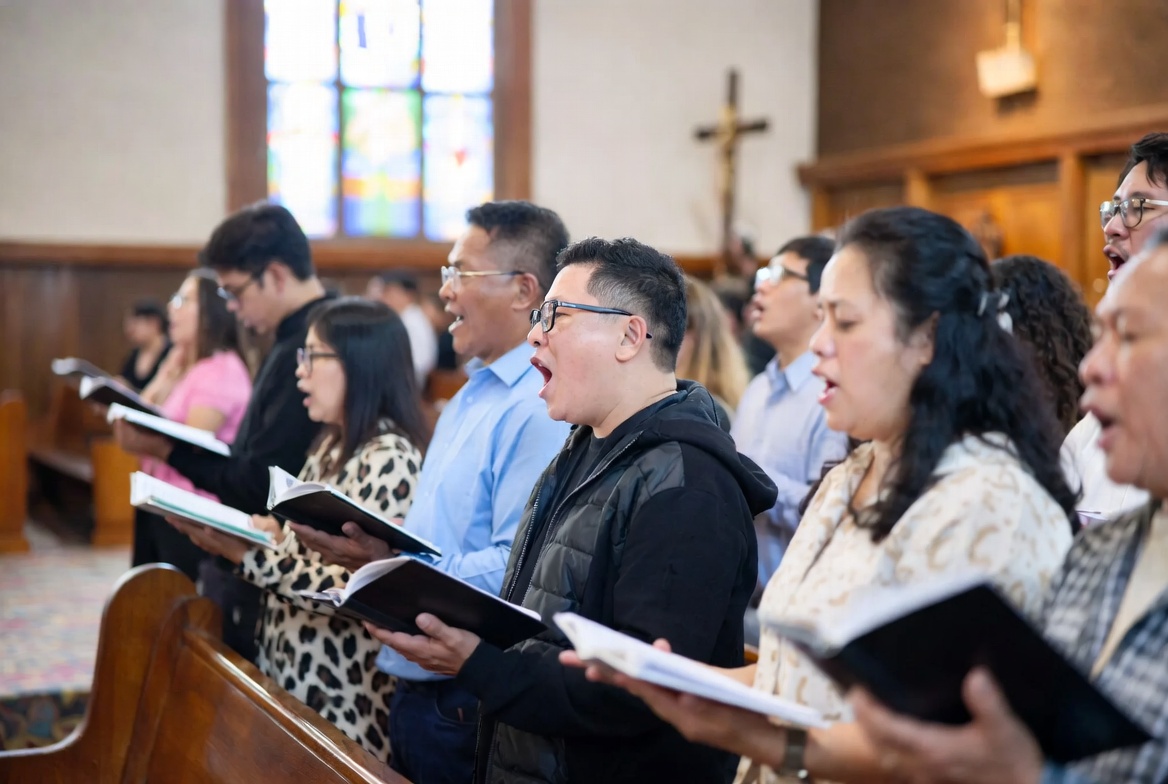
The Internal Revenue Code uses the word "church" throughout but never formally defines it. That creates more ambiguity than most people expect.
For tax purposes, a church is a place of worship including Christian churches, temples, mosques, synagogues, and other worship places. Churches also include conventions and associations of churches and integrated auxiliaries of churches, such as seminaries.
When the IRS needs to evaluate a specific organization, it applies a 14-factor test developed in 1978. The IRS announced this list of 14 criteria to evaluate whether a religious organization qualifies as a church:
The IRS generally uses a combination of these characteristics, together with other facts and circumstances, to determine whether an organization is considered a church for federal tax purposes. No single factor is determinative, and not all 14 need to be present.
For the vast majority of established congregations, this question never comes up. If your church has a regular congregation, holds worship services, has ordained ministers, and operates as a recognizable religious community, it almost certainly qualifies. The 14-factor analysis matters most for newer organizations, parachurch ministries, or entities operating differently from a traditional congregation.
The distinction matters practically. Churches are deemed automatically tax-exempt under federal law per Section 508 of the Internal Revenue Code and may have certain limited exemptions in employment law, particularly for ministerial roles. Organizations that advance religion but don't meet the church definition must apply separately for 501(c)(3) status.
Because churches are automatically exempt under federal law, many never file Form 1023, the application for 501(c)(3) recognition. That's legally fine. Many churches, particularly those covered by denominational group exemptions or independent congregations that have weighed the options, choose not to. For churches that aren't already covered, though, there are real practical advantages to having a formal determination letter in hand.
Many individuals and corporations prefer written IRS confirmation before donating. Most grantors require 501(c)(3) documentation. Lenders often ask for IRS recognition before extending credit.
Many programs, including nonprofit mailing rates and grants, often require formal documentation of nonprofit status. Software pricing programs, technology grants, and nonprofit discount programs typically require it as well. Without a determination letter, even a legitimately exempt church may be locked out of resources available to it.
The process involves three general steps: obtain an Employer Identification Number by filing Form SS-4, file IRS Form 1023 or the shorter Form 1023-EZ with the applicable filing fee, and receive the IRS determination letter confirming exempt status.
If your church is affiliated with a denomination, you may already be covered by a group exemption ruling held by your parent organization. In that case, your church's exempt status flows through the denomination, and you may not need to file separately. Check with your denominational office to confirm.
This is one of the most misunderstood areas of church tax compliance.
Every organization exempt from federal income tax under Internal Revenue Code Section 501(a) must file an annual information return, except for a church, an interchurch organization of local units of a church, a convention or association of churches, and certain other church-affiliated organizations.
Most churches are not required to file Form 990. Under IRC Section 6033(a)(3)(A)(i), churches, integrated auxiliaries of churches, and conventions or associations of churches are explicitly exempt from the annual information return requirement that applies to most other tax-exempt organizations.
This is a significant distinction from other religious nonprofits. A faith-based social services organization, a parachurch ministry, or a religious education nonprofit that hasn't been formally classified as a church by IRS standards must file a Form 990 annually. The exemption applies specifically to entities that meet the IRS definition of a church.
Because churches and certain other religious organizations are not required to file an annual return or notice with the IRS, they are not subject to automatic revocation of exemption for failure to file. Most other nonprofits that fail to file for three consecutive years automatically lose their exempt status. Churches don't face that particular risk.
The Form 990 exemption doesn't eliminate all IRS filing obligations. Several situations create requirements even for churches with general exemption.
Form 990-T: Unrelated Business Income. If your church earns income from activities unrelated to its religious mission, that income may be subject to Unrelated Business Income Tax. Any church with $1,000 or more in gross unrelated business income must file Form 990-T, regardless of the general 990 exemption.
Payroll and Employment Taxes. Churches are generally required to withhold income taxes and may be required to handle Social Security and Medicare taxes, although some churches elect exemption from FICA under IRC Section 3121(w). Where that election hasn't been made, standard payroll tax obligations apply for most employees. Clergy are treated differently: they are generally considered employees for income tax purposes but are typically subject to self-employment tax for Social Security and Medicare rather than standard FICA withholding. Clergy compensation also involves housing allowance considerations that require careful handling.
W-2s and 1099s. Churches must issue appropriate wage and contractor documentation to employees and independent contractors, just as any employer would.
Even without a legal obligation, some churches file voluntarily. By filing a Form 990 and making it available for public inspection, churches can improve their financial transparency and build trust with contributors. Larger churches seeking significant grants or institutional partnerships may find voluntary filing signals the accountability that funders expect. It carries real administrative overhead, so it's worth discussing with your CPA before committing.
Tax exemption isn't permanent and unconditional. Three ongoing obligations deserve particular attention.
Churches and religious organizations are prohibited from activities that result in inurement of the church's income or assets to insiders, which includes the minister, church board members, officers, and in certain circumstances, employees. Examples of prohibited inurement include the payment of dividends, the payment of unreasonable compensation to insiders, and transferring property to insiders for less than fair market value. The prohibition against inurement is absolute: any amount of inurement is potentially grounds for loss of tax-exempt status.
Church resources cannot flow to individuals with a private interest in the organization for personal benefit. Reasonable compensation for legitimate services is fine. Arrangements that enrich insiders at the church's expense are not, and the IRS can impose excise taxes on insiders who benefit from such transactions.
In 1954, Congress added a provision known as the Johnson Amendment to Section 501(c)(3) that prohibits all tax-exempt organizations, including churches, from participating in political campaigns for or against any candidate for public office.
Churches may discuss social and moral issues relevant to their faith, run non-partisan voter registration drives, and host candidate forums where all candidates receive equal access. The key distinction is between advocating on policy issues, which is permitted, and endorsing or opposing specific candidates, which is prohibited.
The Johnson Amendment remains in effect, and churches should proceed carefully when engaging in political activity.
Section 501(c)(3) provides that no substantial part of a tax-exempt organization's activities may consist of attempting to influence legislation. Unlike other charities, churches cannot elect the alternative expenditure test under Section 501(h), which provides clearer dollar-based thresholds for permissible lobbying. Churches remain subject to the vaguer substantial part test, where the IRS evaluates whether lobbying activities are too large a share of the church's overall work.
Churches can engage with public policy and communicate with members about legislative matters. The line is crossed when lobbying becomes a substantial portion of overall activities. Because the standard isn't precisely defined, churches with significant advocacy activity should get guidance from a qualified advisor before scaling that work.
Church tax exemption doesn't mean every dollar a church receives is automatically tax-free. When a church regularly operates a business not substantially related to its religious mission, the income from that activity may be subject to UBIT.
A church can owe UBIT even if an activity supports ministry goals or raises money for good causes. If the activity is a regular trade or business and not substantially related to the church's exempt purpose, the IRS may treat the income as taxable.
Three conditions must all be present for income to be classified as unrelated business income:
Common activities that can trigger UBIT, depending on how they are structured:
Common income categories excluded from UBIT:
One important misconception to address directly: churches sometimes mistakenly believe that as long as they use income from business activities to pay for legitimate religious expenses, they are shielded from UBIT. This is not the case. Merely using income for nonprofit purposes is not sufficient to prevent the income from being subject to UBIT taxation.
If a church has gross income of $1,000 or more for any taxable year from unrelated trade or business activities, it must file Form 990-T and pay tax on that income. UBIT is assessed at the standard corporate rate on net income from those activities, and churches expecting to owe more than $500 in UBIT for the year must make quarterly estimated payments.
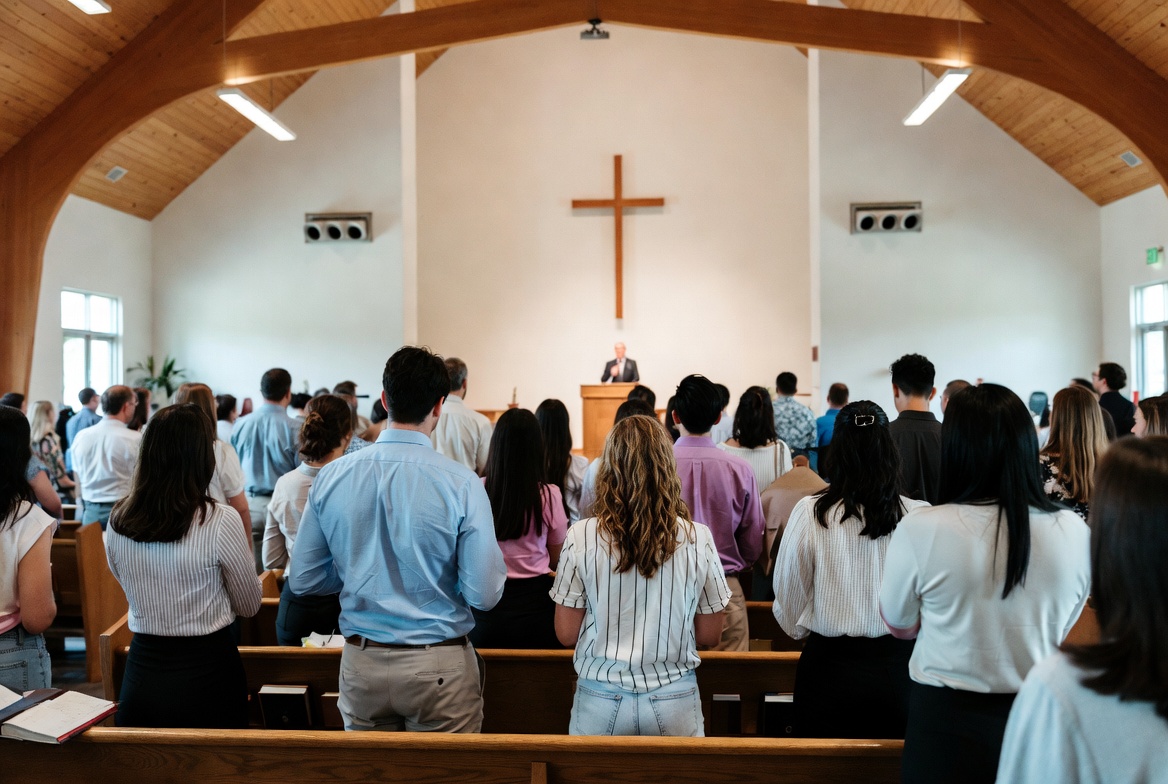
This is a practical compliance area that churches sometimes handle inconsistently, and it directly affects your donors' ability to claim tax deductions.
The written acknowledgment required to substantiate a charitable contribution of $250 or more must contain: the name of the organization, the amount of any cash contribution, a description of any non-cash contribution, and a statement confirming whether the organization provided any goods or services in return for the contribution. When no goods or services were provided, a simple statement to that effect is sufficient. When the only benefit the donor received was intangible religious benefits such as participation in worship services, the acknowledgment can note that specifically.
A few important details worth getting right:
Separate contributions of less than $250 are not aggregated. Weekly offerings to a donor's church of less than $250 each are treated as separate contributions, even if the annual total exceeds $250. Each contribution is evaluated individually against the threshold.
A church may issue a separate written acknowledgment for every contribution of $250 or more, or a single acknowledgment such as an annual summary to substantiate multiple contributions. Most churches send annual contribution statements in January covering the prior year.
Timing matters. A donor can deduct a charitable contribution of $250 or more only if the donor has a written acknowledgment obtained by the earlier of the date the donor files the original return for the year the contribution is made, or the due date including extensions for filing the return.
Without a contemporaneous written acknowledgment, the donor cannot claim the deduction. The IRS has successfully disallowed contributions over $250 when the taxpayer failed to timely obtain the required written acknowledgment, or when the acknowledgment did not contain all required information.
The church typically incurs no direct IRS penalty for failing to provide acknowledgments. But donors who don't receive them lose their deductions, which damages trust and affects future giving. Treating acknowledgment as a stewardship obligation rather than a paperwork task is the right frame. For a complete walkthrough of what a compliant acknowledgment looks like and what it must contain, see our guide to church donation receipts.
Churches have procedural protections under federal law that most other organizations don't. Understanding them matters for any church leader dealing with an IRS inquiry.
Congress has imposed special limitations, found in Section 7611 of the Internal Revenue Code, on how and when the IRS may conduct civil tax inquiries and examinations of churches. These rules, sometimes called the Church Audit Procedures Act, give churches rights before and during any inquiry.
The IRS may begin a church tax inquiry only if an appropriate high-level Treasury official reasonably believes, based on a written statement of the facts and circumstances, that the organization may not qualify for the exemption, or may not be paying tax on unrelated business or other taxable activity.
Once that threshold is met, the audit process follows a specific sequence:
If the church provides sufficient information at any stage to address the IRS's concerns, the matter closes without a records examination.
If a church tax inquiry or examination is completed and does not result in a revocation of exemption or assessment of taxes, the IRS may not initiate another church tax inquiry or examination involving the same or similar issues within the following five years, unless the Secretary of the Treasury approves it in writing.
These rules apply specifically to church tax inquiries, not to everything the IRS might ask about. Routine IRS requests for information, such as requests related to filing or failure to file returns, compliance with income or FICA withholding requirements, or supplemental information needed to process returns, are not covered by the special church audit rules.
These protections apply to churches and certain related entities, including integrated auxiliaries and conventions or associations of churches. They do not extend to all related organizations: schools operated by a church but organized as separate legal entities, for example, fall outside the protections.
Criminal investigations operate outside these protections entirely. And if the IRS suspects an excess benefit transaction under Section 4958, it can initiate inquiries without treating the case as a formal church audit.
Understanding the rules is one thing. Building systems that make compliance a natural outcome of how your church operates is another. A few practices make a meaningful difference.
Accurate fund tracking. One of the most common compliance risks churches face isn't a dramatic violation. It's the slow erosion of designated fund boundaries when internal controls are weak. Restricted dollars must go where donors intended, both as a legal obligation and a stewardship commitment. See our church fund accounting guide for a practical walkthrough of how to structure this correctly.
Spending controls before transactions happen. Many compliance problems show up in accounting after they've already occurred. A staff member charges something to the wrong fund. An expense gets coded to a restricted account it shouldn't touch. Building church spending controls that enforce boundaries before transactions are made prevents this entire category of errors. That's the gap KleerCard's church expense management platform is designed to close, giving finance teams real-time visibility and approval controls rather than discovering problems during month-end close.
Documented compensation practices. Given the absolute prohibition on private inurement, churches should maintain clear documentation of how compensation is set for senior staff. This means a board-driven process, comparison to reasonable compensation benchmarks, and written minutes reflecting approval decisions. It matters most for clergy housing allowance arrangements and any compensation structures beyond a straightforward salary.
Consistent donor acknowledgment. Build a reliable process for generating and delivering written acknowledgments for contributions of $250 or more. Most churches handle this through annual contribution statements sent in January. The process should be systematic enough that no qualifying donation slips through without an acknowledgment.
Financial transparency with your congregation. Most churches aren't required to file public financial returns, but building internal reporting habits that give leaders and members clear visibility into how resources are used strengthens trust and makes problems less likely to accumulate undetected. Our guide to church financial transparency covers practical steps for building that kind of accountability into your regular rhythm.
Are churches automatically tax-exempt? Yes. Churches that meet the requirements of Section 501(c)(3) are automatically considered tax exempt under federal law and are not required to apply for or obtain recognition of exempt status from the IRS. Obtaining a formal determination letter is optional but provides practical benefits many churches find worthwhile, including access to grants, nonprofit discounts, and state sales tax exemptions.
Do churches have to file Form 990? Churches and certain church-affiliated organizations are excepted from the Form 990 filing requirement that applies to most tax-exempt organizations. Churches with $1,000 or more in unrelated business income must file Form 990-T, and churches have separate filing obligations for payroll and employment taxes.
Do churches pay taxes? Churches are exempt from federal income tax on income related to their religious mission. They still owe payroll taxes in most cases, must file Form 990-T and pay tax on unrelated business income over $1,000, and may owe state and local taxes depending on the jurisdiction and specific activities.
What is the Johnson Amendment? The Johnson Amendment is the 1954 provision of the tax code that prohibits churches and all other 501(c)(3) organizations from endorsing or opposing candidates for public office. It remains in effect. Churches may engage with policy issues and host non-partisan candidate forums, but direct candidate endorsements are prohibited under current law.
Can the IRS audit a church? Yes, but with significant restrictions. Congress has imposed special limitations under Section 7611 on how and when the IRS may conduct civil tax inquiries and examinations of churches. A high-level Treasury official must establish reasonable belief before any inquiry begins, and the church must receive written notice and have opportunity to respond before its records are examined.
What is UBIT and does it apply to churches? Unrelated Business Income Tax applies to income a church earns from activities that are regularly carried on and not substantially related to its religious mission. Any church with $1,000 or more in gross unrelated business income in a tax year must file Form 990-T and pay tax on that income, regardless of the general Form 990 exemption.
Does a church need to give donors receipts? For any single contribution of $250 or more, the church must provide a written acknowledgment containing the organization's name, the contribution amount, and a statement confirming whether goods or services were provided in return. Without that acknowledgment, the donor cannot claim the deduction. The church typically incurs no direct IRS penalty for not providing acknowledgments, but donors who don't receive them lose their deductions, which affects future giving.
What is Form 1023? Form 1023 is the IRS application for recognition of 501(c)(3) status. Churches aren't legally required to file it, but doing so produces a determination letter that unlocks grants, nonprofit discounts, and state sales tax exemptions. Form 1023-EZ is a shorter version available to qualifying smaller organizations.
Church tax exemption is a genuine and substantial benefit, and the framework protecting it is built into federal law at a foundational level. Most churches will never face a serious IRS challenge if they operate honestly and maintain reasonable financial practices.
The areas where churches most commonly run into problems are process gaps: restricted funds that drift from their intended purpose, unrelated business income that doesn't get reported, compensation arrangements that weren't properly documented, or donor acknowledgments that fall through the cracks. None of these require bad intent to cause real problems.
Good stewardship and good compliance point in the same direction. The financial practices that protect your church's legal standing are largely the same ones that build trust with your congregation and demonstrate faithful management of the resources entrusted to you.
KleerCard's church expense management tools are built to make that easier. They integrate with leading church accounting platforms to bring spending controls, real-time visibility, and automated receipt capture into one place. See how KleerCard works for your church and we'll have you up and running in hours, not weeks.
KleerCard is built for church leaders by church leaders. Our platform brings together credit cards with spending controls, bill pay, reimbursements, and integrations with leading church accounting software, all designed to support the financial stewardship your congregation deserves. See how KleerCard works for your church and we'll have you up and running in hours, not weeks.


Speak to a member of our team and we can have you up and running in minutes, not weeks.