%202.svg)
One private Christian school scaled from 5 shared expense cards to 60+. Lost receipts fell from 5 per week to under 5 in 7 months. See the exact process.
I have watched private Christian schools struggle with the same expense card problem for years. Jessica, the business manager at one school with roughly 540 students and 100 staff, lived it every day.
The campus ran on just five shared cards. Teachers, coaches, and the maintenance director spent time hunting for the card or paying out of pocket. Receipts disappeared. Month-end turned into a multi-day scavenger hunt.
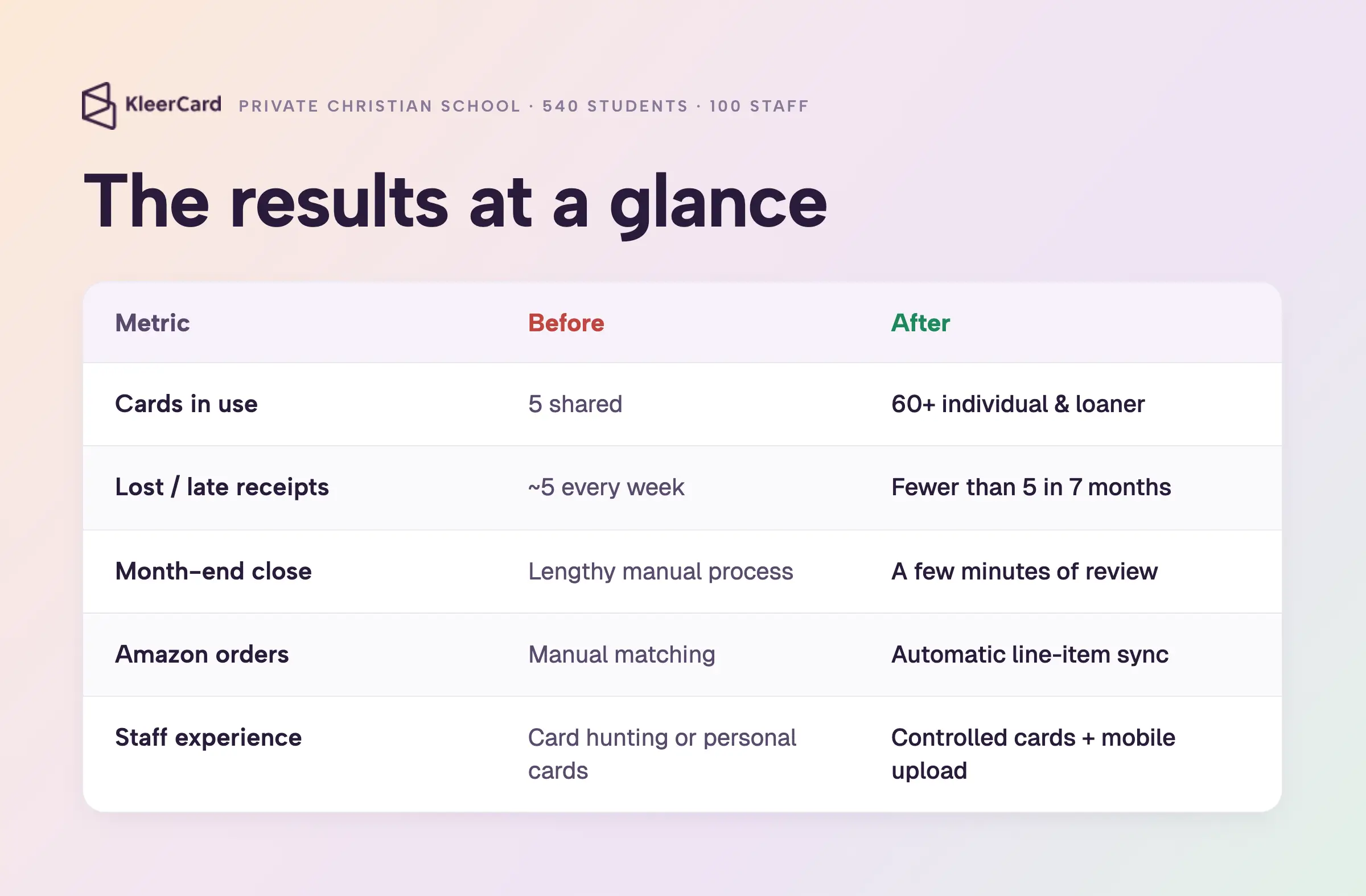
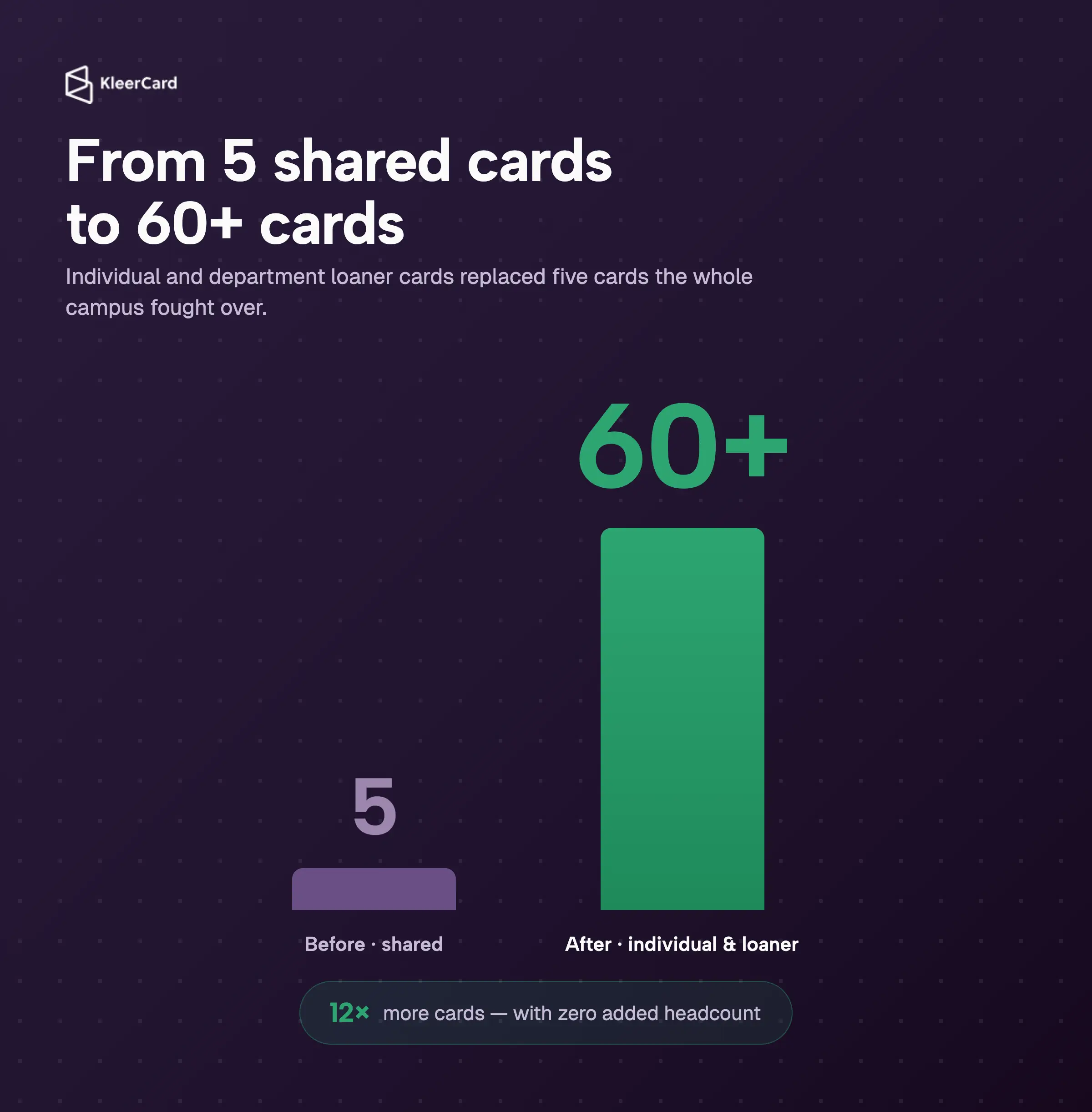
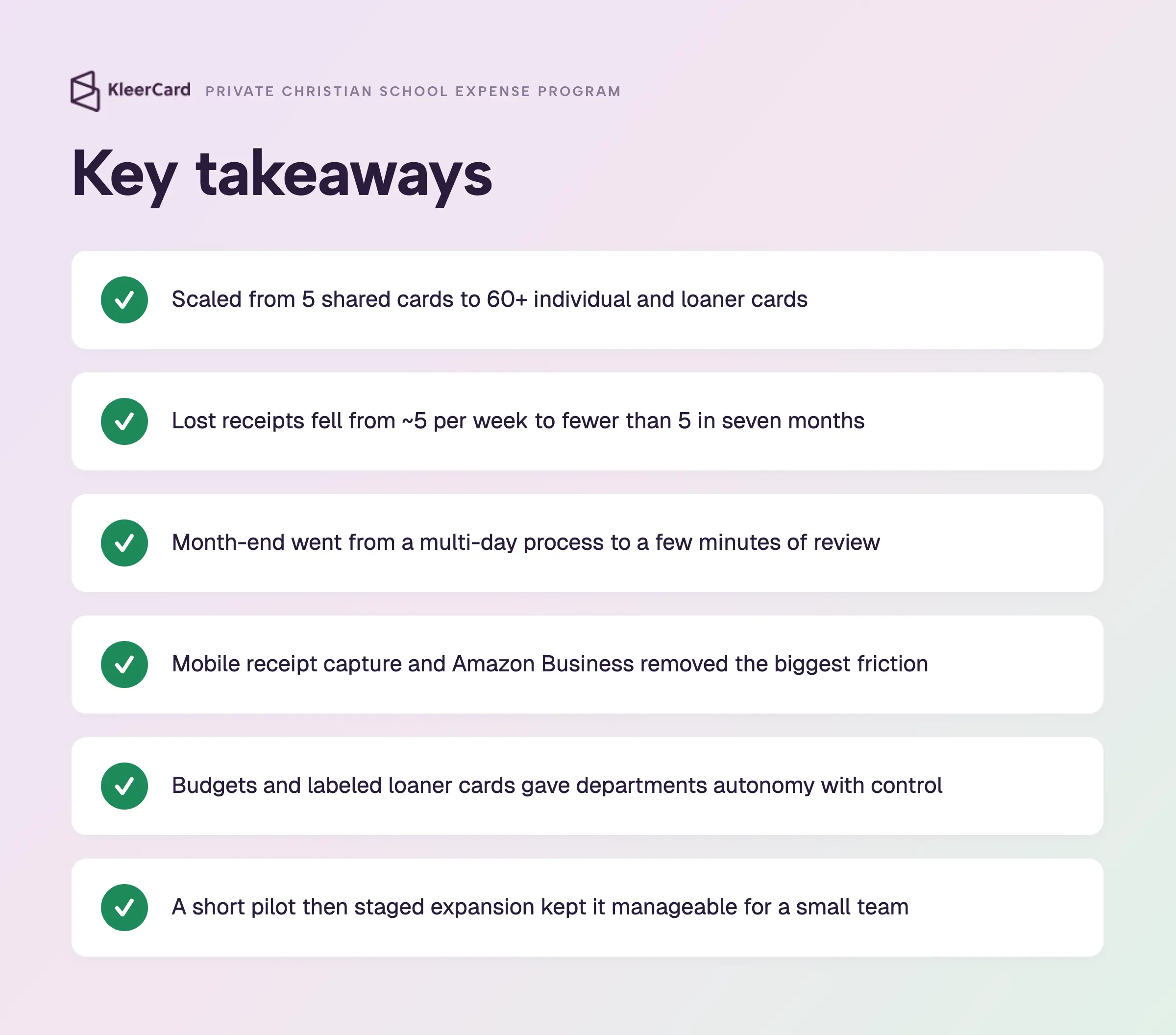
Then the school switched to KleerCard and issued individual and loaner cards. They went from 5 cards to more than 60. Lost receipts dropped from roughly five every week to fewer than five across seven months. Month-end credit-card work shrank to a few minutes of review. Amazon Business orders started showing clean line items automatically.
This is the full story of how that change happened, what it looked like for the maintenance director and teachers, and the practical steps any private Christian school finance team can take.
Jessica’s private Christian school with roughly 540 students and 100 staff ran the entire campus on five shared expense cards. That number looked simple until the day-to-day reality hit.
The maintenance director needed a quick run to Home Depot or a plumbing part. He either walked the halls hunting for the card or put the purchase on his personal card and waited for reimbursement. Teachers buying classroom supplies faced the same choice. Coaches and department leads did too.
Amazon orders for books, supplies, and materials arrived without clean line-item detail. The finance office spent hours matching paper receipts to statements. Jessica’s team chased roughly five lost or late receipts every single week. Month-end turned into a lengthy manual process of chasing documentation and coding transactions under deadline pressure.
With more than 100 staff and only five cards circulating, this five-card arrangement created constant small friction. That friction cost the finance office hours every week and left staff frustrated. Many schools in this position also struggle with the ongoing bill pay and reimbursements cycle that follows personal card use.
Jessica’s private Christian school with roughly 540 students and 100 staff started with only five shared cards and was chasing roughly five lost or late receipts every week. Private Christian schools operate with tight finance teams, restricted gifts, and a heavy reliance on Amazon and local vendors. Five shared cards force trade-offs that grow more painful as the school year progresses.
When a card is shared, accountability softens. When a teacher or facilities person uses a personal card, the reimbursement cycle creates extra work. When receipts lag, month-end stretches and the finance office loses hours that could go to actual stewardship reporting.
In my experience working with private Christian school finance teams after Compassion International and Switch, access and visibility are the real issues. A program with individual limits, loaner cards for departments, automatic receipt capture, and Amazon Business integration removes those exact friction points without adding headcount. Clear controls matter for any organization managing restricted funds, as shown in established GFOA purchasing card guidance.
Here's how one private Christian school went from 5 cards to 60+:
Jessica’s private Christian school with roughly 540 students and 100 staff moved the entire campus onto this system. The lower-school principal was already looking forward to the next school year when every teacher would have a card with a clear limit. The old reimbursement batches of ten or twelve requests at the deadline simply disappeared. The numbers are specific to their campus, but the pattern is one I have seen work for other private Christian schools with small finance offices.
Jessica’s private Christian school with roughly 540 students and 100 staff moved from five shared cards to more than sixty individual and loaner cards through a short pilot focused on the messiest spenders.
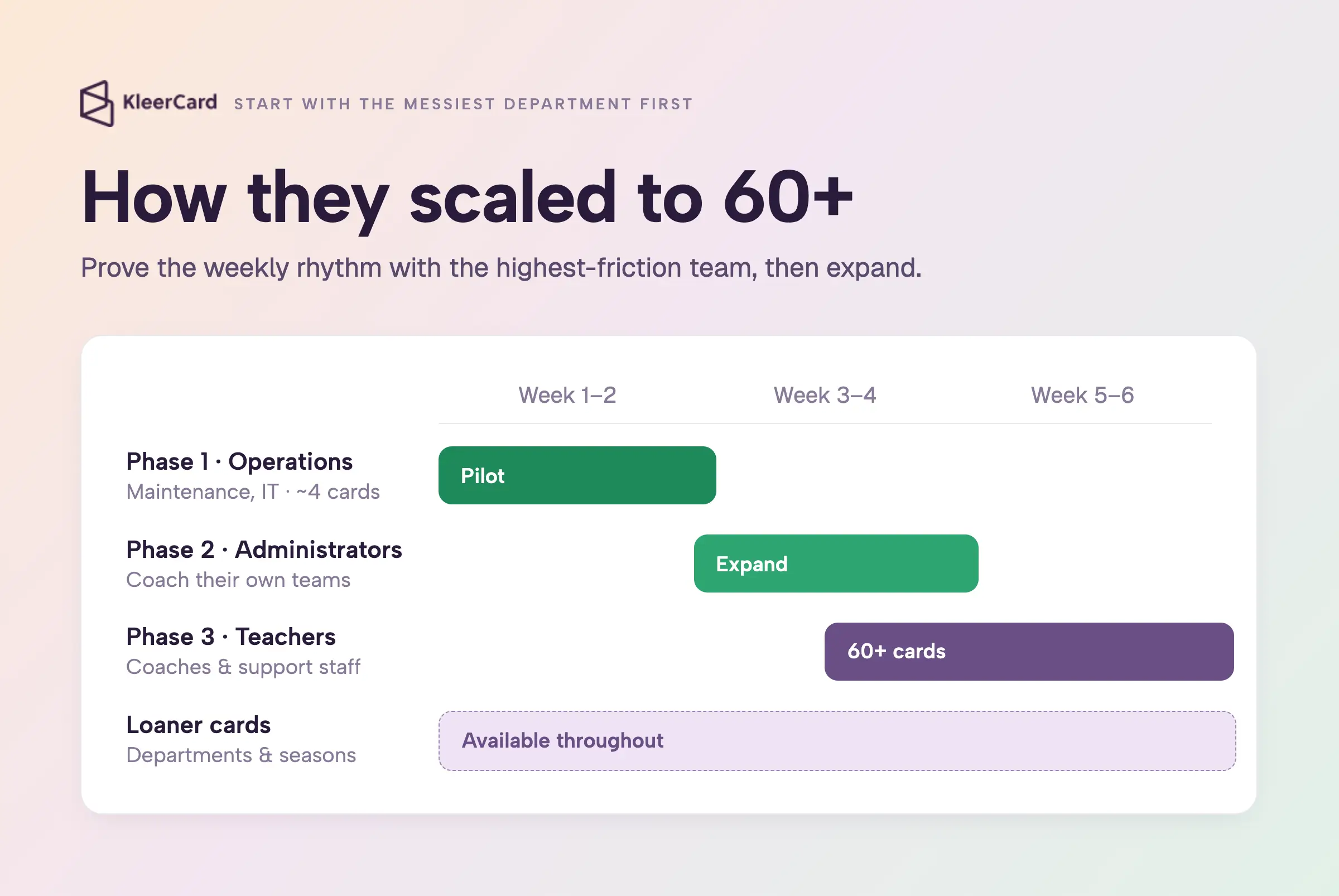
Phase one focused on operations: maintenance, IT, vehicles, and Home Depot runs. About four people received cards. The logic was simple. If the process worked for the highest-friction department, everything else would be easier. That group caught on within days.
They issued a small pilot group of individual cards and a few labeled loaner cards. Budgets and basic category limits went on each card. Mobile receipt capture became the rule at the moment of purchase. Amazon Business was connected so line items flowed automatically through Amazon Business expense tracking.
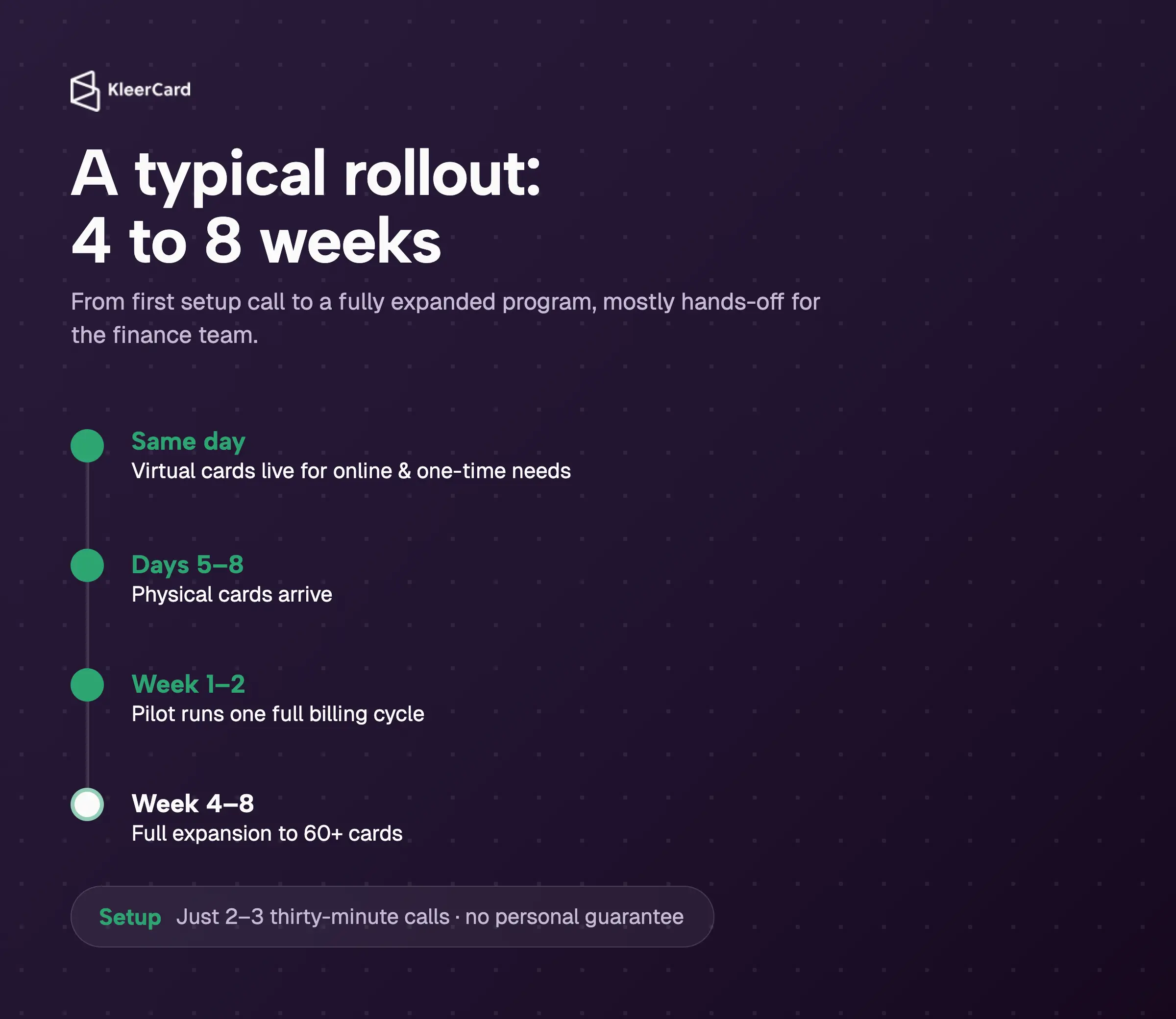
Physical cards arrived in a few days. Virtual cards were available immediately for online or one-time needs. After one clean billing cycle, they expanded to administrators so those leaders could coach their own teams. Then they moved to teachers, coaches, and support staff. Within a short staged rollout the campus moved from five shared cards to more than sixty individual and loaner cards.
Typical setup for a school of this size runs two or three thirty-minute calls. The finance office keeps control through real-time visibility, per-card budgets, and automatic locking when a receipt is missing. No personal guarantee was required. The white-glove setup approach made the process light for a small team. You can schedule a demo to see the same staged approach in action.
Administrators received a self-loading limit that cut daily red tape. Amounts above that routed to the head of school. Cardholders without admin status submitted funding requests that their administrator approved by email. Department loaner cards sat on the dashboard and could be handed out for events or seasonal needs without issuing a permanent personal card.
The key was starting small, proving the weekly rhythm, then expanding. That approach kept the one- or two-person finance team from being overwhelmed. The same product features that supported Jessica’s school are available to other private Christian schools.
At Jessica’s private Christian school, the maintenance director no longer walks the halls looking for a shared card. He carries a controlled card with clear limits. When he needs a part from Home Depot or a supplier, he buys it, snaps a photo of the receipt, and the transaction is already coded and visible to the finance office. Automatic receipt tracking removed the old chase.
Teachers stopped using personal cards for classroom supplies. Each has a card or access to a department loaner with a budget that matches their classroom allocation. A summer-camp director who barely needs a card during the school year becomes a heavy spender in June and July; she now has a card in her name for that season. Lower-school teachers are scheduled to receive modest classroom cards so they stop using personal funds for supplies.
Amazon orders for the school now arrive with line-item detail already attached through the Amazon Business for education integration. Finance codes the purchase to the correct student-activity or classroom account without guessing which event the balloons or tablecloths belonged to. The same visibility lets the finance office pull up any cardholder’s recent activity instead of asking for screenshots.
Loaner cards labeled for specific departments or events give flexibility without losing control. The finance office can see every transaction in real time and follow up only on the rare missing receipt.
The daily experience changed from friction to normal work. Staff can move quickly. The business office stays in control.
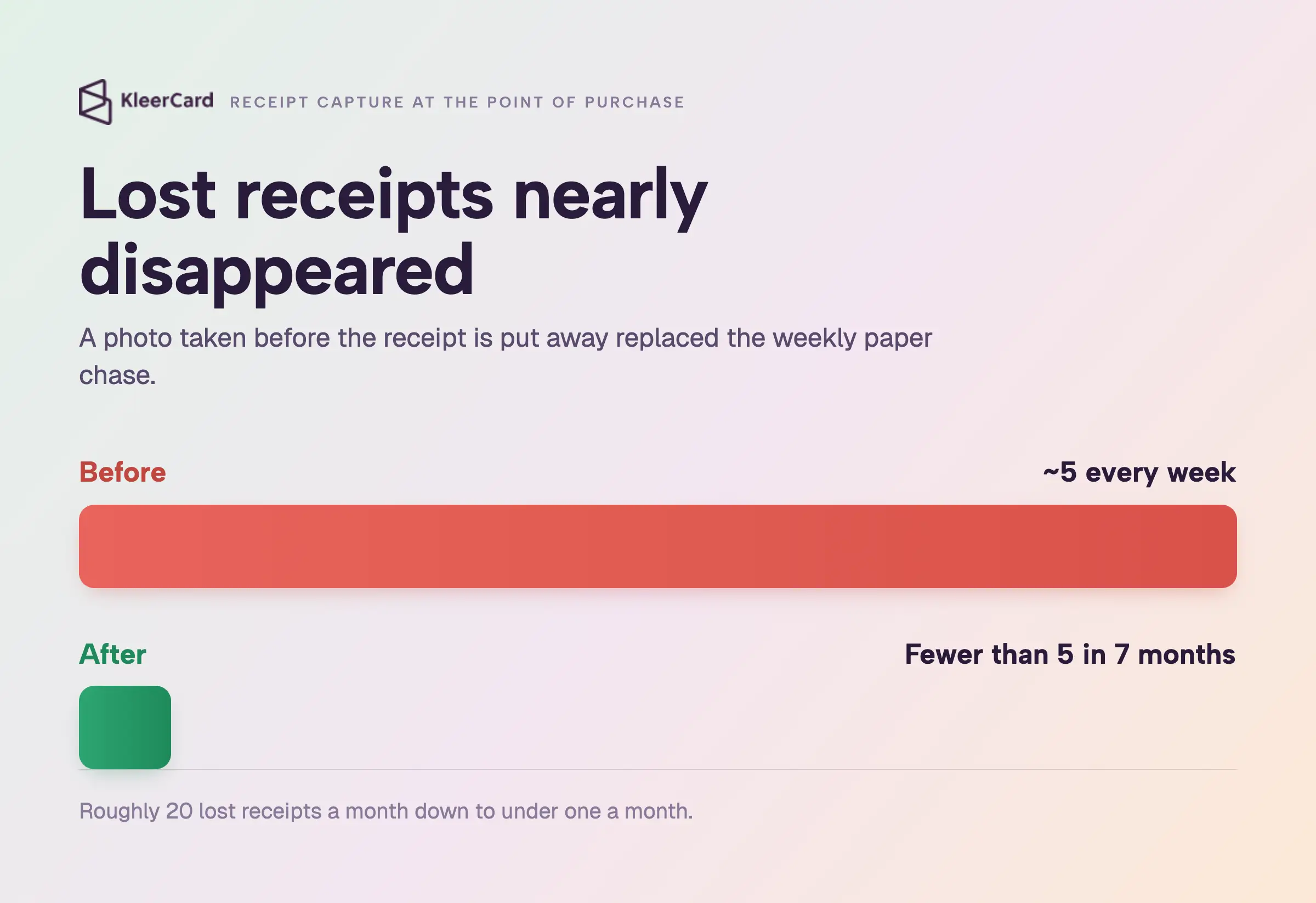
At Jessica’s private Christian school, the shift from five shared cards to more than sixty reduced lost receipts from roughly five every week to fewer than five across seven months and turned month-end into a few minutes of review.
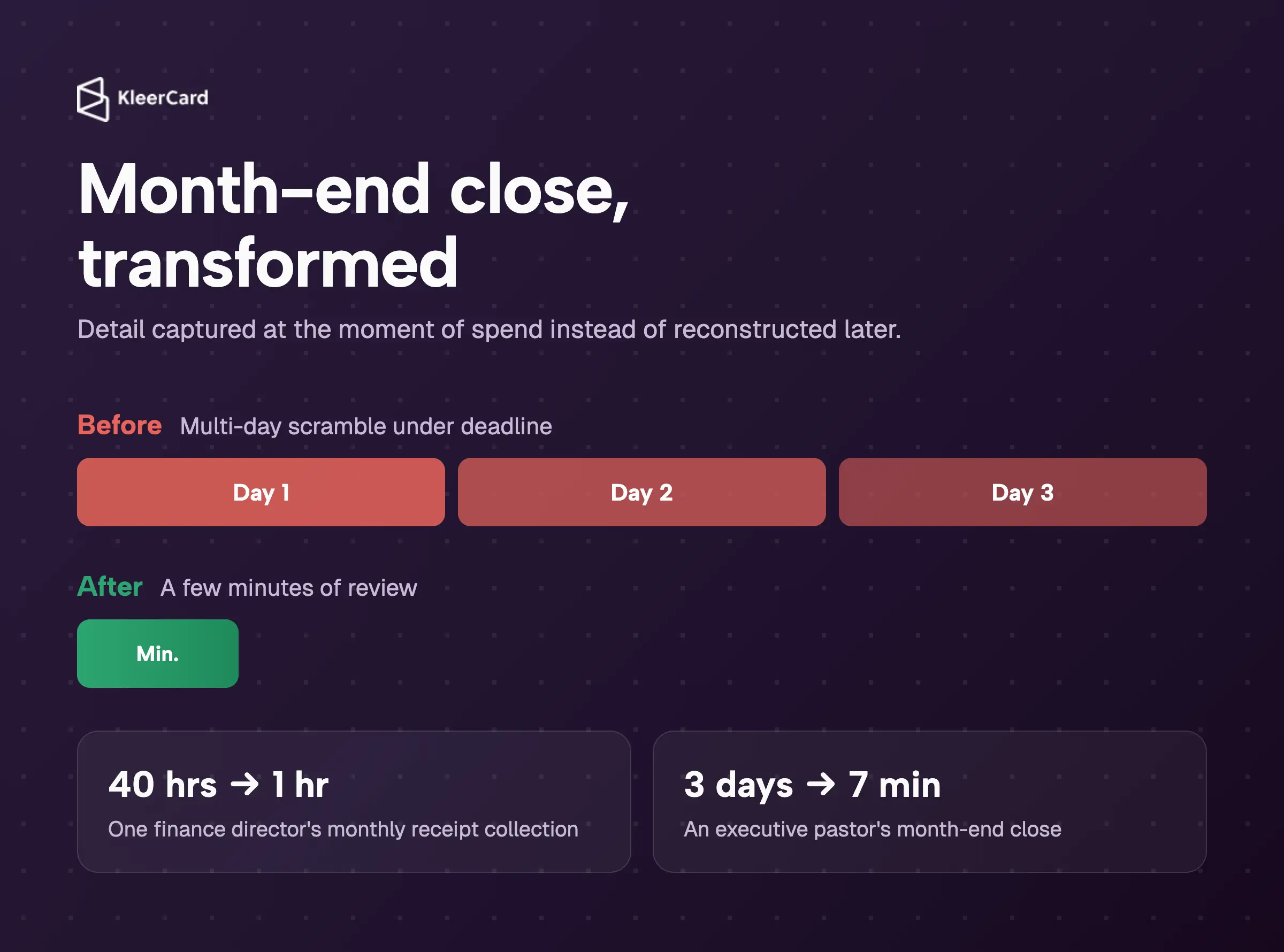
Before the change, month-end meant a multi-day chase. Statements arrived. Missing receipts had to be hunted. Coding happened under pressure. The process drained the finance office right when they needed to focus on closing the books.
After the shift, most receipts were already captured at the point of purchase. Amazon line items arrived automatically. The weekly rhythm meant only a handful of exceptions needed attention. Month-end credit card work became a few minutes of review instead of a multi-day scramble.
I have seen the same pattern at other organizations. One finance director cut receipt collection from forty hours a month to one hour. An executive pastor moved month-end close from three days to seven minutes. The underlying change is the same: capture the detail at the moment of spend instead of reconstructing it later. This is the practical side of debits and credits for schools and pairs well with tools like QuickBooks for nonprofits or Aplos.
Start with the messiest department. For many schools that is facilities or the Amazon-heavy ordering process. Prove the weekly rhythm there first. Once those users are comfortable, administrators and teachers adopt the same habits faster. Jessica’s private Christian school with roughly 540 students and 100 staff showed that the same pattern works when the pilot is focused and controls are clear from day one.
Use labeled loaner cards for departments and seasonal needs. Give individual cards with clear budgets to frequent spenders. Require a receipt photo at the time of purchase. The behavior change of taking the picture before putting the receipt away is what drove lost receipts from five per week to fewer than five in seven months. Connect Amazon Business on day one.
Run a short pilot, complete one full billing cycle, then expand. Two or three short setup calls are usually enough to get the controls and accounting connection right. Set modest per-card budgets early. Administrators can carry a higher self-loading limit; classroom or departmental cards can carry tighter ones. Over-limit requests still route for approval, so control stays intact without constant intervention.
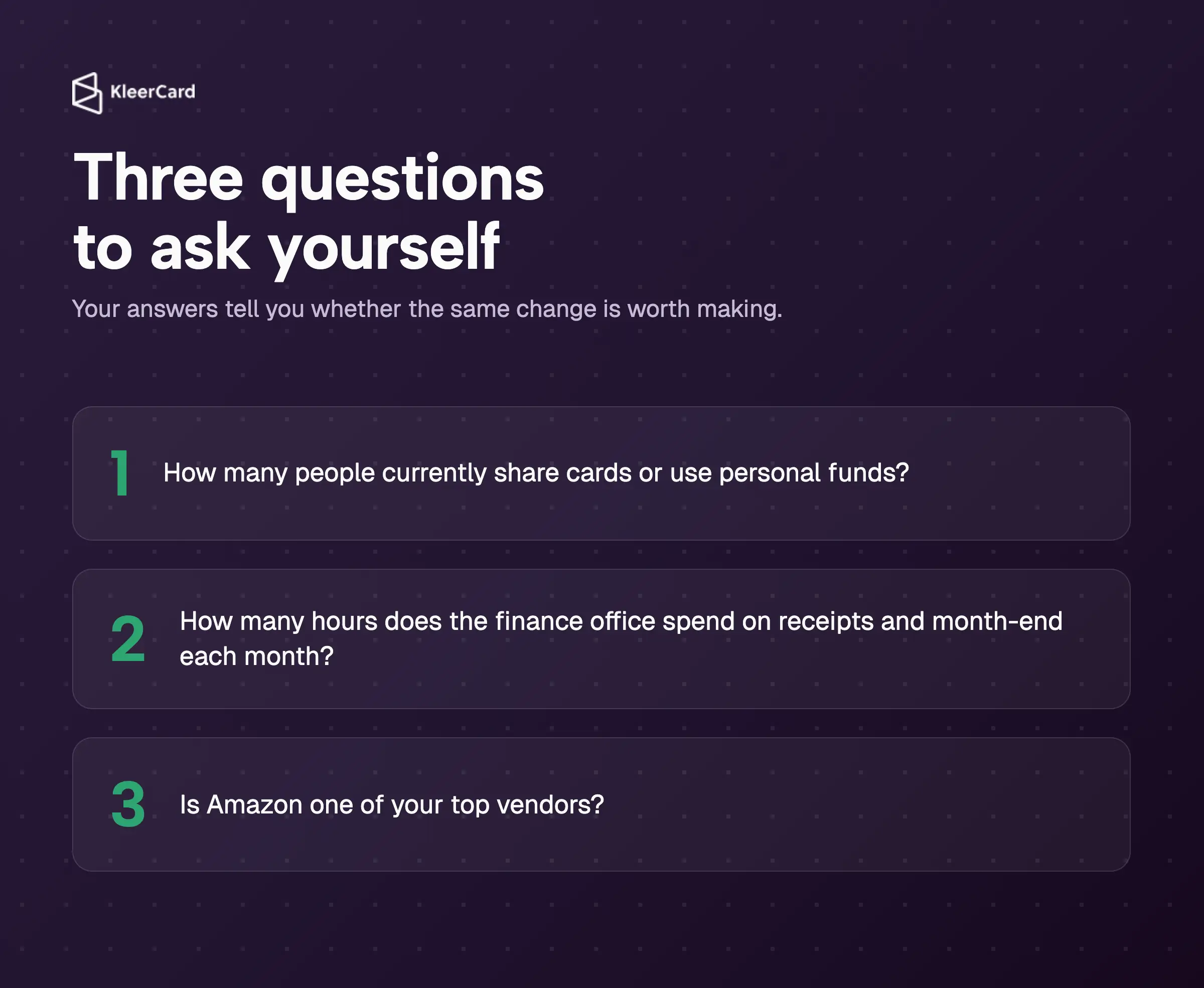
Ask yourself three practical questions: How many people currently share cards or use personal funds? How many hours does the finance office spend on receipts and month-end card work each month? Is Amazon one of the top vendors?
Those answers tell you whether the same change is worth making. More options for schools appear in the guide to best credit cards for school districts and the broader solutions for nonprofits.
Jessica’s private Christian school with roughly 540 students and 100 staff went from five shared cards to more than sixty individual and loaner cards. Lost receipts dropped from roughly five every week to fewer than five across seven months, and month-end credit-card work shrank to a few minutes of review. The same path is available to other private Christian schools.
Look for a platform that issues unlimited individual and loaner cards without a personal guarantee. You need real-time visibility, per-card budgets and locks, mobile receipt capture, and clean Amazon Business integration. School-friendly accounting connections matter too. Platforms built for nonprofits and schools often avoid the personal guarantee requirement that stops many private Christian schools from moving forward. See the options for credit cards with no personal guarantee and the nonprofit credit card. Current pricing is transparent for private Christian schools of this size.
A typical staged rollout for a private Christian school of this size takes four to eight weeks from pilot to full expansion. Virtual cards can be live the same day. Physical cards arrive in five to eight days. Implementation is usually two or three thirty-minute calls with the finance team. Many schools start with the white-glove setup path so the finance office stays focused on their regular work.
If your school is still running on a handful of shared cards or heavy reimbursements, the same path that produced the results at Jessica’s private Christian school is available. Schedule a short demo or explore the expense management approach and the product that made this change possible. The solutions for nonprofits page and the guide to best credit cards for school districts show how similar schools have structured their programs. For Amazon-heavy ordering, the Amazon Business expense tracking workflow is especially useful.
Most private schools that move beyond shared cards use a combination of individual cards with budgets and labeled loaner cards for departments. Mobile receipt capture and automatic coding keep the finance office from chasing paper. Jessica’s private Christian school with roughly 540 students and 100 staff moved from five shared cards to more than sixty individual and loaner cards using exactly this approach and reduced lost receipts from roughly five every week to fewer than five across seven months.
It depends on staff size and how many people make regular purchases. Jessica’s private Christian school with roughly 100 staff found that more than 60 individual and loaner cards eliminated the old friction without creating new control problems.
Require a photo of the receipt at the moment of purchase and use automatic locking when a receipt is missing. Pair that with Amazon Business line-item sync for online orders. Jessica’s private Christian school dropped from roughly five lost receipts every week to fewer than five across seven months of the school year.
Yes. Some platforms designed for nonprofits and schools issue cards without requiring a personal guarantee from an administrator or board member.
When the cards are linked to an Amazon Business account, line-item detail flows automatically into the expense system. That removes the need to chase paper receipts for routine school orders. See the official Amazon Business site and Amazon Business for education for setup details.
A staged pilot-to-full expansion for a private Christian school typically runs four to eight weeks. Setup itself is usually two or three short calls.
Issue a controlled card with clear limits and category restrictions. The cardholder can move quickly while the finance office retains real-time visibility and the ability to lock the card if needed. This is what allowed the maintenance director at Jessica’s private Christian school with roughly 540 students and 100 staff to stop hunting for a shared card after the move to more than sixty cards.
Jessica’s private Christian school went from five shared cards to more than sixty individual and loaner cards. Lost receipts collapsed. Month-end shrank to a few minutes. The maintenance director and teachers could spend what they needed without the old friction.
The finance office gained time and visibility without adding headcount. That is the real win for a private Christian school: more capacity for the actual mission of the school instead of chasing receipts and reconstructing transactions.
If your campus is still running on a handful of shared cards, the same change is possible. Start with the department that creates the most friction, set clear limits, capture receipts at the point of purchase, and expand from there. Review the expense management options built for schools and nonprofits, or schedule a demo to see the workflow with your own chart of accounts and Amazon setup.
Owen Hill is co-founder of KleerCard. After years working with churches and schools through Compassion International and later at Switch, he now serves as volunteer treasurer at his Orthodox parish. He writes from direct day-to-day experience helping private Christian schools solve shared-card friction, receipt chaos, and month-end close problems.


Speak to a member of our team and we can have you up and running in minutes, not weeks.